
EU CBAM Inverter Carbon Filing Goes Live July 7
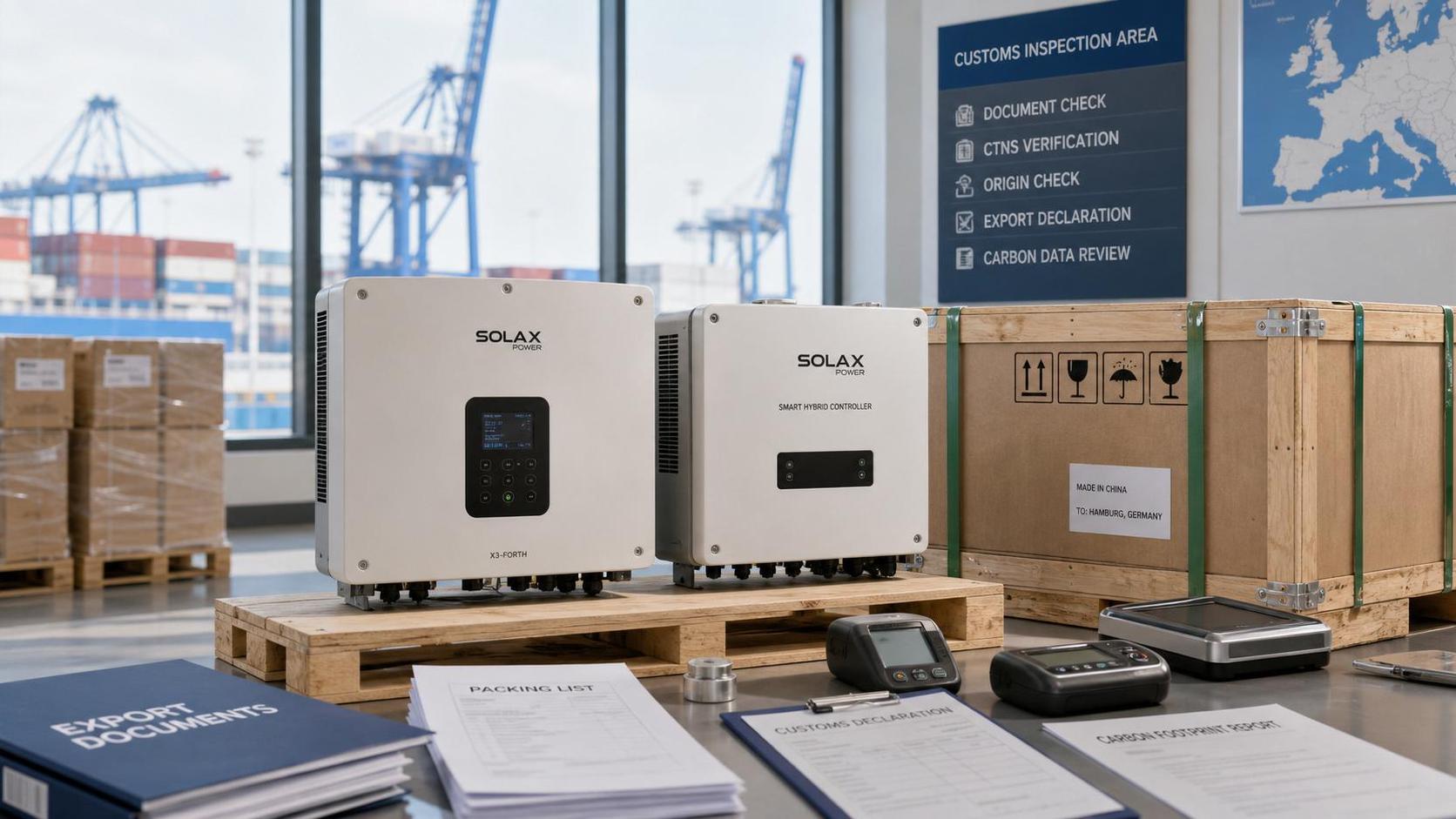
On July 7, 2026, the European Union’s CBAM-specific carbon data filing system for photovoltaic inverters entered into operation, adding inverter products to a mandatory reporting step during the transition phase. For exporters shipping central inverters, intelligent hybrid controllers, and related products to the EU, the change matters because lifecycle carbon data registration and third-party verification are now tied to customs clearance, with direct implications for delivery timing, compliance preparation, and transaction execution.
What the July 7 launch formally changes
The confirmed change is that the dedicated CBAM carbon data declaration system for photovoltaic inverters became active on 2026-07-07. According to the provided event summary, all central inverters, intelligent hybrid controllers, and similar products exported to the EU must complete lifecycle carbon emissions data registration and third-party verification before customs clearance. The same summary also states that this is the first time inverters have been included in the CBAM transition period’s mandatory reporting scope, and that the change directly affects the delivery rhythm and compliance costs of Chinese exporting companies.
Where the immediate pressure is likely to appear
Export execution now depends on pre-clearance carbon documentation
From an industry perspective, exporters are the first group likely to feel the operational effect because the reporting requirement is connected to customs clearance rather than treated as a separate background obligation. That means shipment preparation, document readiness, and handover timing may all need closer coordination. What deserves closer attention is whether existing export workflows already contain the data collection, registration, and third-party verification steps needed before goods move into the clearance stage.
Manufacturing and product data teams face a new compliance interface
Observably, manufacturers of covered inverter products may be affected through the need to organize lifecycle carbon emissions information in a form suitable for registration and external verification. The issue is not only reporting itself, but whether internal technical files, production records, and product-level carbon information can support a filing process without delaying outbound orders. For companies supplying multiple inverter categories, the practical focus may shift to identifying which product lines fall into the covered scope and how supporting documentation is assembled.
Procurement and supply chain coordination may tighten
Analysis shows that procurement and supply chain functions may also be affected because any missing upstream data can slow the completion of lifecycle carbon registration. Where suppliers contribute materials, components, or process information that feeds carbon accounting, downstream exporters may need stronger document coordination and clearer submission timing. The relevant business change is less about ordinary sourcing cost alone and more about whether procurement planning can support compliant delivery schedules.
Verification and compliance service activity may become more time-sensitive
For compliance-related service providers, including parties involved in verification or documentation support, the main impact is likely to be timing sensitivity. Since third-party verification is described as a pre-clearance requirement in the provided summary, support work may become more closely linked to shipment milestones and customer delivery commitments. Companies relying on external compliance support should therefore pay attention to process sequencing, document completeness, and review lead times.
Practical points companies should watch now
Confirm whether covered products are already mapped to the new filing path
Analysis shows that businesses should first determine which exported product categories are now expected to follow the inverter-specific CBAM filing process. The provided information names central inverters and intelligent hybrid controllers, but companies should pay close attention to how their own product classifications, technical descriptions, and commercial documents align with the covered scope in practice.
Review whether document packages are sufficient for registration and verification
What deserves closer attention is the readiness of technical and compliance materials needed to support lifecycle carbon emissions registration and third-party verification. The input does not provide detailed execution guidance, so this should not be treated as a settled document checklist. Even so, exporters may need to review whether existing technical files, emissions records, and trade documentation are organized in a way that can support filing before clearance.
Adjust delivery planning around compliance lead time
Observably, the reported link between filing completion and customs clearance makes delivery planning a practical concern. Companies with fixed dispatch windows, project-based deliveries, or tender-linked milestones may need to factor compliance preparation into shipment scheduling. At this stage, it is more appropriate to understand this as a workflow risk that requires monitoring rather than as proof of a uniform delay across all transactions.
Continue tracking execution language and market-facing documents
Because the provided summary confirms system activation and scope inclusion but does not provide detailed operating rules, businesses should continue watching for clarifications in official wording, compliance practice, tender documents, customer requirements, and market feedback. The current issue is not only whether the rule exists, but how consistently it will be interpreted in filing, verification, and clearance-related interactions.
Why this reads as an execution signal rather than a background policy update
Analysis shows that this development is more than a general policy headline because it introduces an operating system and ties reporting to a pre-clearance step for covered inverter products. That makes it more appropriate to understand the news as an execution signal within the CBAM transition process. At the same time, observably, the input does not provide enough detail to conclude how uniform the implementation pace, document review standard, or transaction impact will be across different exporters and product categories. Continued attention is therefore warranted not only on the rule itself, but on how it is applied in real trade workflows.
How the market should read the July 7 milestone
In practical terms, this event indicates that carbon reporting for certain photovoltaic inverter products has moved closer to day-to-day export operations. The confirmed facts point to a real compliance step that can affect delivery rhythm and cost, while the broader market impact still depends on how filing practice, verification expectations, and trade documentation requirements develop after launch. The most reasonable reading for now is that this is a landed compliance change with further execution details still worth watching closely.
Basis of this report and what still needs verification
This article is based on the user-provided news title, event date, and event summary. For developments of this kind, commonly relevant source types may include official announcements, regulator releases, customs or trade authority information, industry association updates, standards-related documents, and reporting by established industry media. A specific official source link was not provided in the input, so the underlying official publication path still needs to be verified on an ongoing basis. What also remains worth monitoring includes detailed policy language, verification practice, filing expectations, changes in tender or procurement documents, industry feedback, and how companies implement the requirement in actual export operations.
Recommended News


Industry Briefing
Get the top 5 industry headlines delivered to your inbox every morning.