
Vietnam Aluminum Start-Up Eases AI Backtracking Alloy Supply
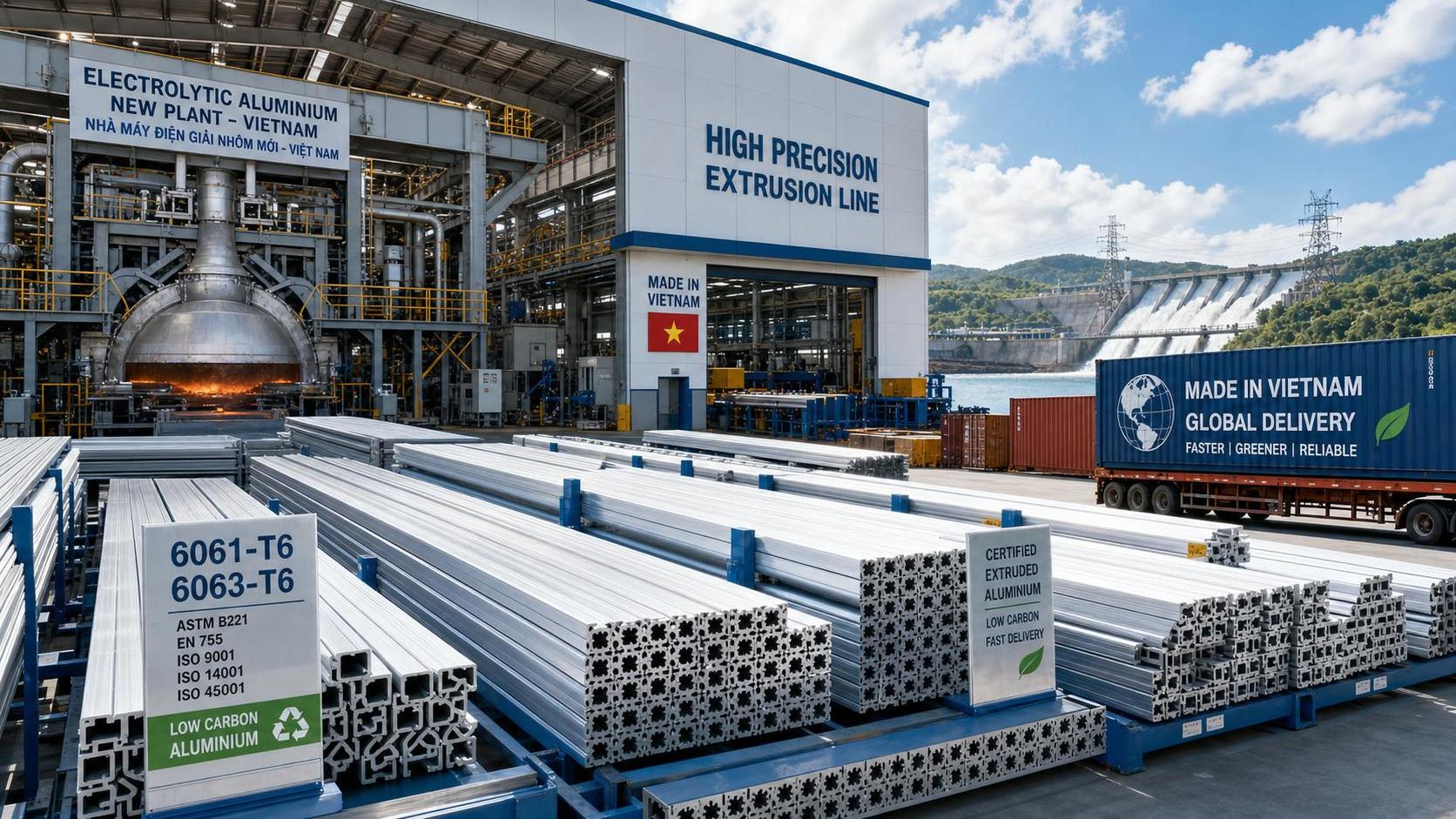
On July 2, 2026, the first-phase 150,000-ton electrolytic aluminum project of Tran Hong Quan Metallurgy in Vietnam entered operation ahead of schedule, with first shipments expected in mid-July. For buyers, processors, and project suppliers serving AI Backtracking support structures in Southeast Asia and the Middle East, this development is worth watching because it combines new output, lower-carbon hydropower-based production, and certified 6063-T6 and 6061-T6 alloy profiles in a market where delivery times have been under pressure.
What has been confirmed so far
According to a June 18 notice from Vietnam’s Ministry of Industry and Trade, Tran Hong Quan Metallurgy brought its phase-one 150,000-ton electrolytic aluminum project into operation on July 2, 2026, earlier than the original July 15 schedule. The first batch of shipments is expected to depart in mid-July.
The project uses low-carbon hydropower energy, and its carbon intensity is stated to be 62% lower than coal-powered aluminum production in China. Its 6063-T6 and 6061-T6 aluminum alloy profiles have passed TÜV Rheinland certification for wind structural components.
The announced impact of this new capacity is a significant easing of the supply tightness for high-precision extruded profiles used in AI Backtracking brackets in Southeast Asia and the Middle East, with lead times expected to shorten from 14 weeks to 8 weeks.
Where the supply-chain impact may be felt first
Procurement teams may gain more room on delivery planning
Analysis shows that procurement functions are likely to focus first on whether the earlier start-up and mid-July shipments translate into more dependable order scheduling. The most immediate effect, if realized as indicated, would be in sourcing cycles for 6063-T6 and 6061-T6 high-precision extrusion materials tied to AI Backtracking bracket applications.
What deserves closer attention is not only nominal capacity, but also how quickly material becomes available for actual order allocation, shipment execution, and specification matching.
Processors and fabricators may see pressure ease in precision profile sourcing
From an industry perspective, processors serving structural applications may be among the earliest affected because the announcement directly concerns certified T6-state alloy profiles and high-precision extrusions. For these businesses, the key issue is whether shorter lead times improve production sequencing, contract fulfillment, and customer delivery commitments.
Observably, the relevance is strongest where buyers require both material performance and certification alignment rather than generic primary aluminum availability alone.
Traders and regional distributors may need to reassess inventory timing
For trading companies and channel operators active in Southeast Asia and the Middle East, the expected reduction in lead time could alter how inventory buffers are set. Analysis shows that the business impact would likely center on shipment timing, replenishment cadence, and customer quotation validity rather than on headline capacity alone.
These participants should watch whether first deliveries in mid-July are followed by stable release volumes, since market tightness often changes only when scheduled production becomes repeatable in commercial terms.
Project-side customers may pay closer attention to compliance and carbon attributes
End users and project buyers may also view this development through a compliance lens. The stated lower carbon intensity and TÜV Rheinland certification are likely to matter in customer communication, material qualification discussions, and supplier comparison for structural-use alloy profiles.
That said, analysis shows that commercial adoption still depends on how these attributes are documented and accepted within each buyer’s own procurement and engineering process.
What companies should watch next
Track the transition from announcement to shipment execution
The first practical checkpoint is whether the expected mid-July shipments move on time. For companies planning around shorter lead times, the distinction between project commissioning and repeatable outbound delivery remains important.
Check whether certified grades match actual order needs
Businesses using 6063-T6 and 6061-T6 for AI Backtracking bracket applications should confirm that the available profile specifications, certification documents, and structural-use requirements align with customer orders. The certification status is relevant, but it does not by itself resolve every downstream processing or project-side requirement.
Update supplier communication and lead-time assumptions carefully
If buyers have been working with a 14-week planning window, they may need to reassess forecast assumptions only after shipment performance becomes clearer. A shorter quoted lead time can improve planning, but premature adjustments could create gaps if volume ramp-up proves uneven.
Separate low-carbon messaging from operational readiness
From a practical standpoint, companies should distinguish between the project’s lower-carbon production profile and its near-term supply reliability. Both matter, but they affect different parts of the commercial decision: one supports qualification and positioning, while the other determines scheduling and fulfillment confidence.
Why this looks like a supply signal, not a fully settled outcome
Observably, this update carries more weight than a routine commissioning notice because it links three factors in one event: earlier-than-planned start-up, specific alloy profile certification, and a stated easing of lead-time pressure in two active regional markets. That makes it relevant beyond upstream aluminum production alone.
At the same time, it is more appropriate to understand this as an early operating and supply-chain signal rather than a completed market reset. The key reason is that the first shipments are still pending, and the durability of the expected lead-time improvement will depend on continued dispatch, specification consistency, and buyer acceptance.
How the market is best reading this development now
In practical terms, this news points to a potentially meaningful near-term improvement in the availability of high-strength aluminum alloy profiles for AI Backtracking support structures, especially in Southeast Asia and the Middle East. It also highlights that lower-carbon production and third-party certification are becoming part of the supply discussion, not just output volume.
A balanced reading is that the development matters immediately for sourcing expectations, but its broader significance still depends on how smoothly shipments begin and whether the projected reduction in lead times holds in real transactions. For now, it is best understood as a concrete short-term supply development with longer-term implications that still require verification.
Basis of this report
This article is based on the user-provided news title, event date, and event summary. For developments of this type, commonly relevant source categories include official government notices, company announcements, industry association updates, authoritative media reports, and certification or standards-related documents.
A specific official source link was not provided in the input, so the underlying details still require ongoing verification as further shipment, delivery, and market-response information becomes available. Continued attention should be paid to follow-up official wording, first shipment execution, and whether the indicated lead-time change is sustained in actual business practice.
Recommended News

Industry Briefing
Get the top 5 industry headlines delivered to your inbox every morning.