EU CBAM Adds Floating Offshore Wind Structures
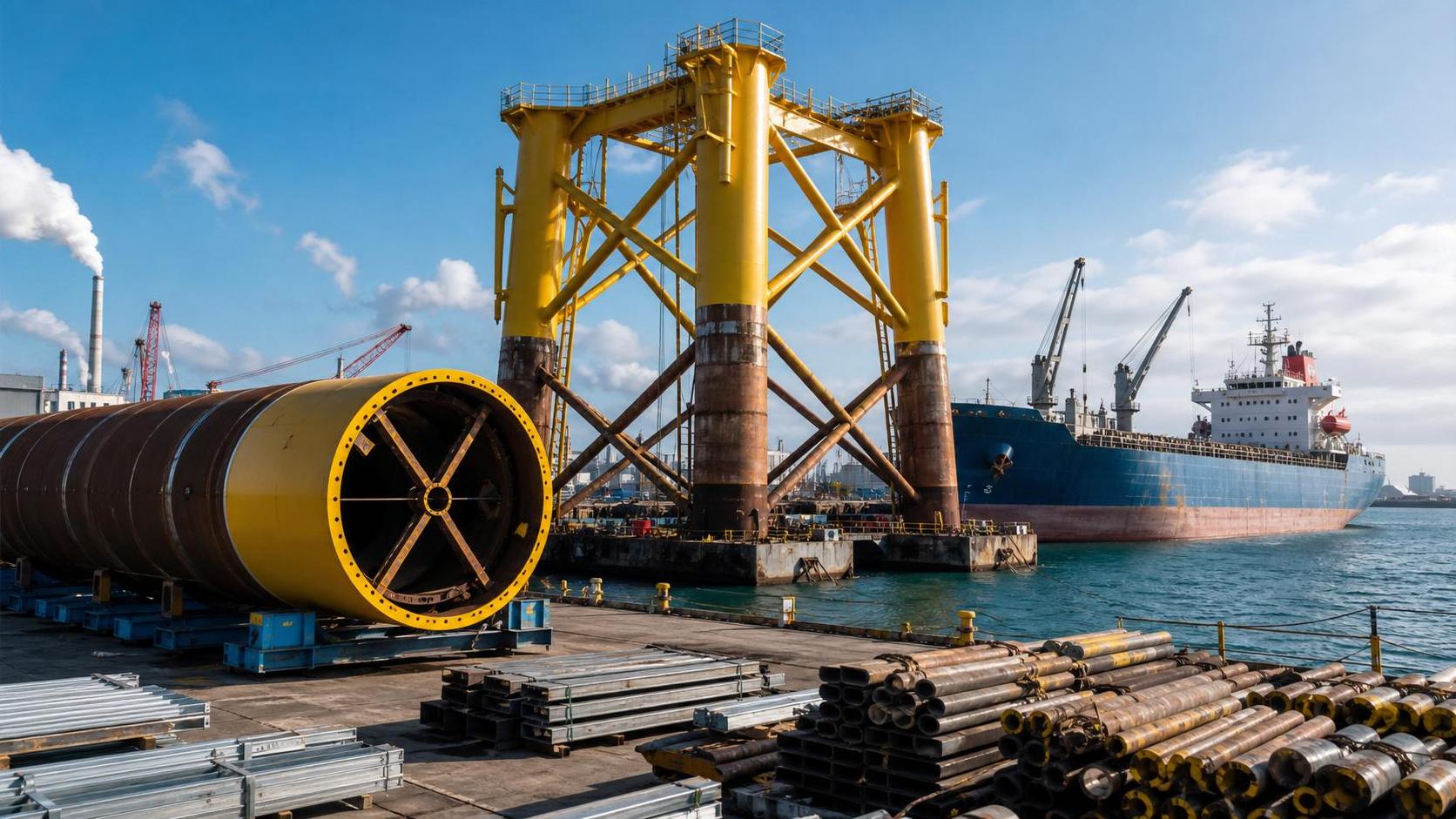
On July 14, 2026, the European Commission announced a revision to CBAM implementing rules that brings project-specific Monopiles & Jackets for Floating Offshore Wind into mandatory carbon emissions verification. From August 1, 2026, importers will be required to submit life-cycle carbon footprint reports covering upstream steel, coating, and transport, a change that deserves attention because it reaches beyond customs filing and into sourcing, documentation, compliance coordination, and delivery planning for EPC contractors and Chinese structural component exporters.
What the revision now covers
According to the information provided, the July 14, 2026 revision is the first time that Monopiles & Jackets dedicated to Floating Offshore Wind projects have been included in the scope of mandatory carbon emissions verification under CBAM. The new requirement takes effect on August 1, 2026, and applies to importer reporting of life-cycle carbon footprint information. The reporting scope stated in the summary includes upstream steel, coating, and transport stages. The adjustment is described as having a direct impact on the compliance declaration route and delivery timeline of global EPC contractors and Chinese structural component exporters.
Where the operational pressure is likely to appear
Import declaration shifts from product entry to emissions traceability
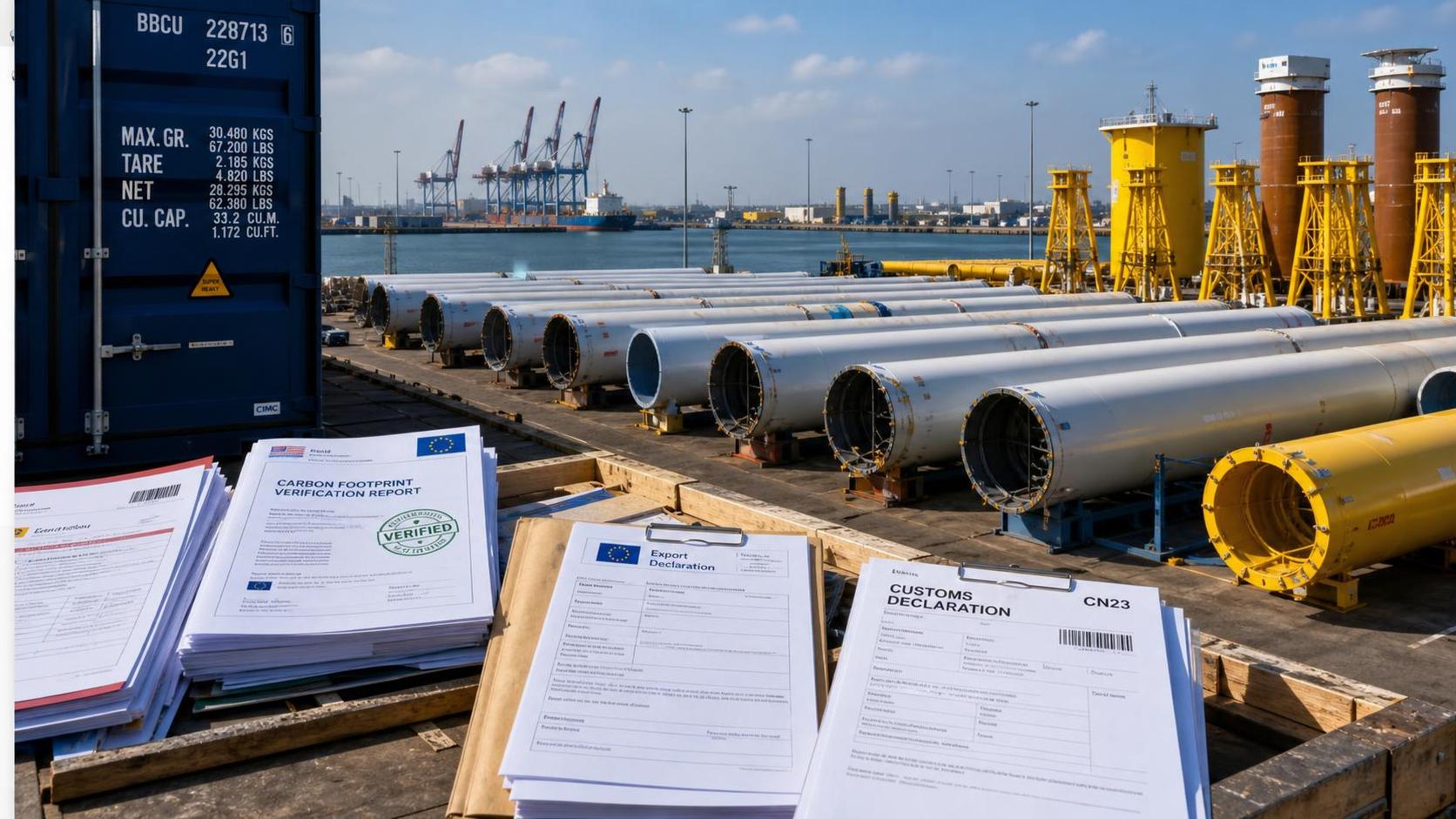
For import-facing trading entities and project procurement teams, the immediate issue is not only whether the product is listed, but whether supporting carbon information can be assembled in a form suitable for CBAM reporting. Because the required reporting scope extends to upstream steel, coating, and transport, the practical burden is likely to move toward document collection, supplier coordination, and consistency across shipment and project records.
EPC delivery planning may face a tighter documentation sequence
For global EPC contractors, the rule change matters because project delivery for Floating Offshore Wind structures often depends on coordinated technical, commercial, and logistics milestones. Analysis shows that once carbon reporting becomes a mandatory import step, compliance preparation may need to be aligned earlier with procurement packages, supplier submissions, and shipping arrangements. What deserves closer attention is whether reporting readiness becomes a gate in the import process rather than a parallel paperwork exercise.
Chinese fabricators may need broader upstream data visibility
For Chinese exporters of structural components, the impact is likely to center on data availability across production and supply chain stages that were not always organized for importer carbon reporting. From an industry perspective, the stated inclusion of upstream steel, coating, and transport means exporters may need to pay closer attention to how material origin records, coating-related documents, and logistics data are prepared, retained, and transferred to customers. The issue is less about a single certificate and more about whether the reporting chain is complete enough to support the importer's filing obligations.
Supply chain service providers may become part of the evidence path
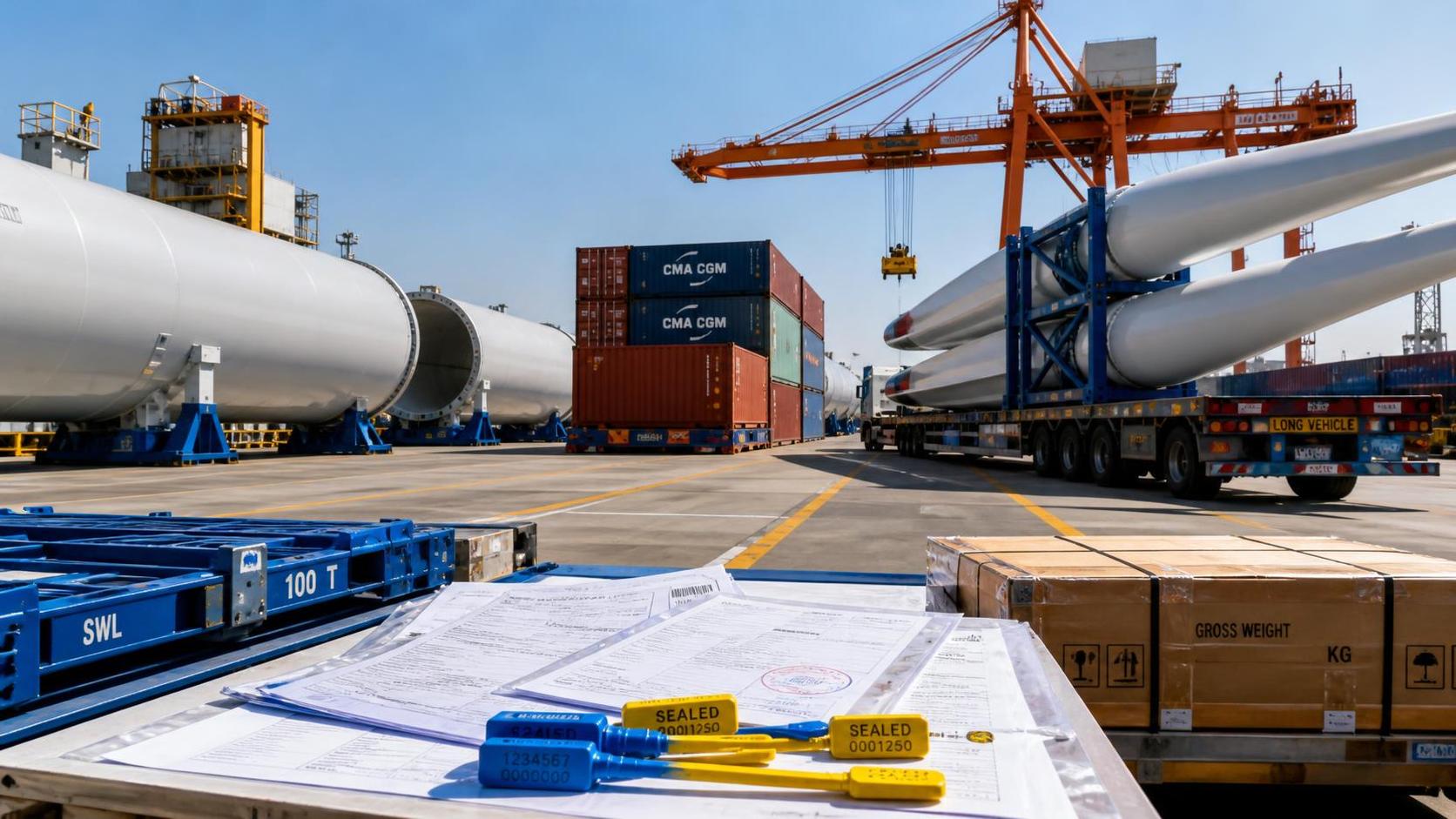
For logistics, documentation, and compliance support providers, the adjustment may affect how transport records and shipment-related information are handled in project execution. Observably, where carbon accounting expands into transport stages, service providers may be asked to support a more structured evidence trail linked to shipment timing, routing, and handover records, even if they are not the primary reporting party.
What companies should watch before August reporting begins
Check whether current product classification and project scope match the revised listing
Companies involved in Floating Offshore Wind supply should first confirm whether the goods they handle fall within the newly covered category described in the revision. This is especially important where project-specific structural components, package descriptions, or contract documents use technical terminology that does not automatically map to customs or compliance language.
Review whether existing supplier files can support life-cycle reporting
Analysis shows that firms should examine whether current supplier documentation already covers the upstream steel, coating, and transport elements identified in the summary. If those records are incomplete, inconsistent, or dispersed across different vendors, the reporting obligation may affect both compliance timing and shipment readiness.
Revisit bid documents, purchase terms, and delivery schedules
Because the stated impact includes compliance declaration pathways and delivery cycles, companies should pay attention to whether contracts, procurement specifications, and handover checklists clearly allocate responsibility for carbon data provision. It is more appropriate to understand this as a documentation and execution issue as much as a trade compliance issue.
Follow the wording of subsequent implementation guidance
The summary confirms the rule revision and the reporting start date, but it does not provide detailed execution language beyond the listed reporting scope. For that reason, companies should continue monitoring how official wording, review expectations, and market-facing documentation practices develop after the announcement rather than assuming that all operational details are already settled.
How this change is best understood at this stage
Observably, this development is more than a headline policy signal because it comes with a defined effective date and a specific extension of CBAM verification scope to Floating Offshore Wind structures. At the same time, it should not be treated as a fully closed operational framework on the basis of the provided summary alone. From an industry perspective, the more useful reading is that a concrete compliance trigger has arrived, while the exact filing rhythm, supporting evidence expectations, and project-level implementation practices still require close tracking.
A practical reading for the market
This update is best understood as an implemented rule change with immediate execution implications for imports beginning August 1, 2026, particularly where Floating Offshore Wind Monopiles & Jackets are sourced through cross-border project supply chains. Analysis shows that its significance lies in how carbon accounting is being tied more directly to procurement records, upstream material visibility, and delivery preparation. The near-term market question is therefore less whether the rule matters and more how consistently participants can translate it into workable reporting and handover processes.
Basis of this article
This article is based on the user-provided news title, event date, and event summary. For developments of this kind, relevant source categories typically include official announcements, regulator publications, customs or trade authority notices, industry association updates, standards-related documents, and reporting by established business or sector media. No specific official source link was provided in the input, so the exact source document and link still need to be verified on an ongoing basis. Further observation is also needed regarding detailed implementation language, certification and compliance interpretation, tender document changes, market feedback, and how companies execute the new reporting requirement in practice.
Recommended News

Industry Briefing
Get the top 5 industry headlines delivered to your inbox every morning.