
VIEP Tightens FOW Tender Rules on Monopile Fatigue
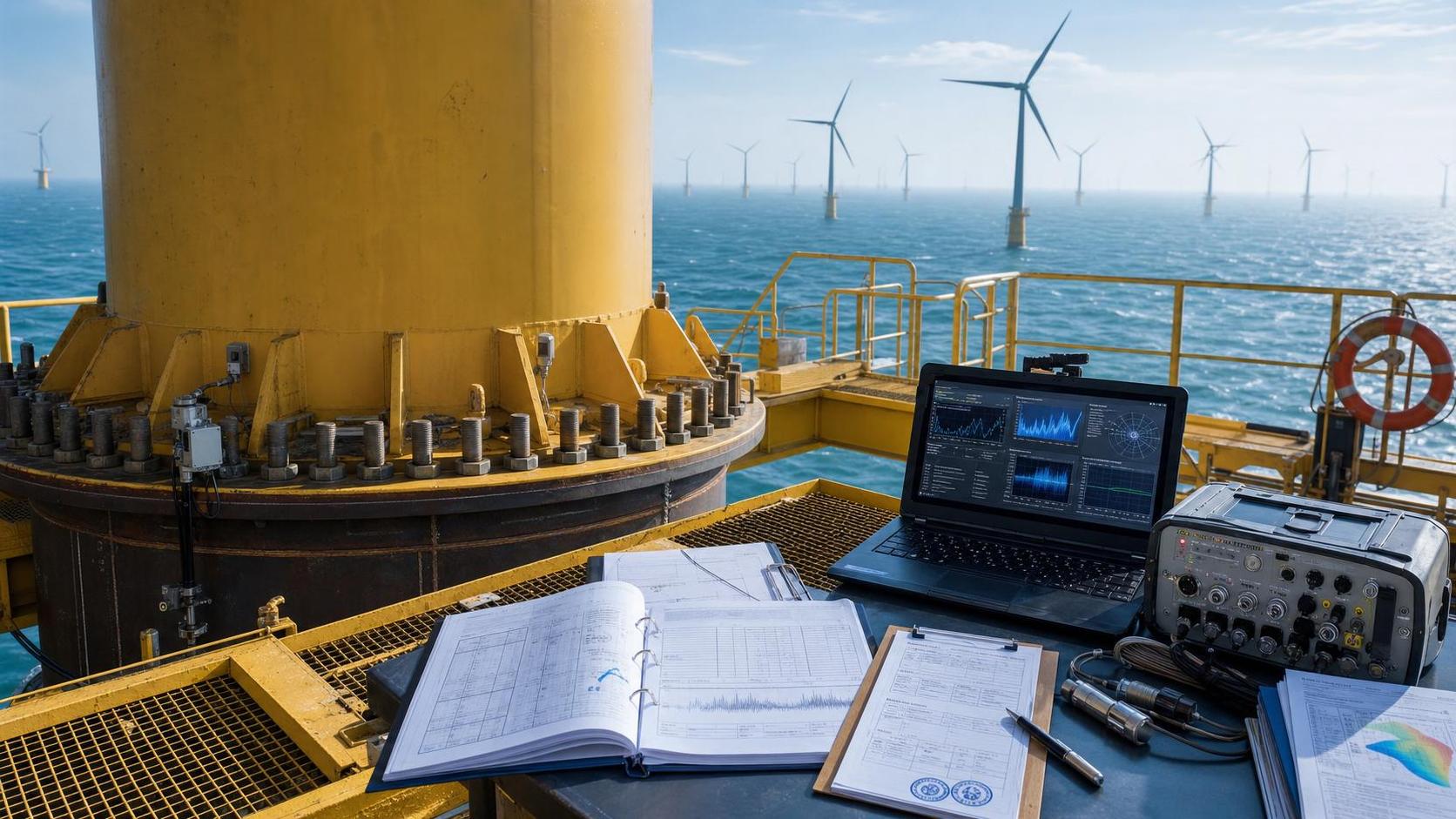
On July 4, 2026, Vietnam Electricity Group (VIEP) issued an addendum to its floating offshore wind tender terms that immediately raises the technical entry threshold for monopile structures in projects that have not yet opened bids. The change matters not only to bid teams, but also to certification, engineering, analysis, supplier qualification, and delivery planning, because it links tender compliance to dual fatigue certification and a locally recognized time-domain fatigue assessment based on Vietnam-specific wind and wave spectra.
What the addendum now requires
According to the supplementary tender clause Ref: VIEP-FOW-2026-ADD3, all monopile structures used in Floating Offshore Wind projects must meet both DNV-GL ST-0126 and ABS RP2A-WSD fatigue certification requirements. In addition, bidders must submit a time-domain fatigue analysis report driven by local wind and wave spectra and recognized by the Vietnam National Maritime Institute (VNMI).
The new requirement took effect on July 4, 2026. It applies to all 1.2GW offshore floating wind projects that had not yet opened bids at the time the addendum was issued.
Where the operational pressure is likely to appear
Bid preparation now depends more heavily on engineering documentation
From an industry perspective, developers, EPC participants, and bidding consortia may be affected first at the documentation stage. The addendum does not only ask for a structural outcome; it asks for specific proof paths. That means tender responsiveness may hinge on whether technical files, fatigue verification materials, and VNMI-recognized analysis outputs can be assembled within the revised compliance framework.
Design and verification teams face a narrower compliance path
Analysis shows that engineering and certification service providers are likely to feel the impact in fatigue assessment workflows. The requirement to satisfy both DNV-GL ST-0126 and ABS RP2A-WSD introduces a dual-standard compliance burden, while the local wind and wave spectrum condition ties technical validation more closely to Vietnam-specific analysis inputs. The practical pressure point is not only design adequacy, but also whether the analytical method and recognition pathway align with the tender wording.
Manufacturing and supply decisions may be influenced by approval readiness
For fabrication and supply-chain participants, the immediate issue is less about volume and more about qualification sequencing. Observably, suppliers linked to monopile structures may need to confirm whether their supporting technical package can match the dual-certification and local-analysis requirements before commercial commitments move forward. In this context, the impact may appear in bid support, document turnover, and delivery assumptions rather than in physical production alone.
What companies should watch closely now
Check whether current bid packages still match the revised threshold
Companies involved in pending bids should review whether existing monopile fatigue documentation already addresses both named standards and whether the submitted or planned analysis route is compatible with VNMI recognition. This is the most immediate screening point because the rule is already in force.
Separate formal tender language from internal technical assumptions
What deserves closer attention is the difference between having an internal engineering basis and having tender-ready evidence that matches the exact clause. Teams should verify that fatigue assessment reports, standard references, and recognition statements are aligned with the revised wording rather than relying on earlier assumptions or partially matching studies.
Reconfirm responsibilities across certification and analysis partners
Where external service providers are involved, bidders should clarify who is responsible for dual-certification support, who prepares the time-domain fatigue analysis, and how VNMI recognition is addressed. In practice, unclear ownership in these steps can slow tender response even when the underlying engineering work is advanced.
Monitor whether further clarifications follow the addendum
Because the requirement was issued as an urgent revision, companies should keep watching for any additional official wording, interpretation notes, or procedural clarifications tied to Ref: VIEP-FOW-2026-ADD3. That is especially relevant for teams finalizing bid schedules, compliance matrices, and supplier communication.
How this development is best understood at this stage
Analysis shows that this is more than a minor drafting adjustment, because it changes the compliance basis for monopile-related tender preparation in projects that have not yet opened bids. At the same time, it would be premature to treat it as a fully settled long-term market outcome beyond the scope stated in the addendum. It is more appropriate to understand this as a concrete near-term rule change with broader signaling value: VIEP is placing explicit weight on dual fatigue verification and locally recognized time-domain analysis within current floating offshore wind procurement.
Observably, the part that merits continued attention is not only the standards named in the text, but also the operational role of VNMI-recognized local spectrum analysis. That element may shape how bidders organize technical evidence and compliance sequencing in the immediate tender window.
A short reading of the industry significance
Based on the information available, this update should be read as an actionable procurement change rather than as a general market narrative. Its immediate significance lies in bid eligibility, engineering proof, and document readiness for the affected 1.2GW project group. The broader industry takeaway is still developing, so the most balanced view is to treat this as a binding short-term compliance shift that may also signal a firmer technical review posture in Vietnam's floating offshore wind tender process.
Basis of this article and what still needs verification
This article is based on the user-provided news title, event date, and event summary concerning VIEP's July 4, 2026 supplementary tender clause Ref: VIEP-FOW-2026-ADD3. For this type of industry update, source categories typically relevant include official tender notices, corporate announcements, industry association releases, authoritative media coverage, and standards-related documents.
No specific official source link was provided in the input, so the exact publication record and any subsequent clarification documents still require ongoing verification. Follow-up attention should remain on whether VIEP, VNMI, or related tender documentation releases further interpretive details affecting certification scope, analysis acceptance, or submission practice.
Recommended News

Industry Briefing
Get the top 5 industry headlines delivered to your inbox every morning.