What water depth makes deepwater wind jackets impractical?
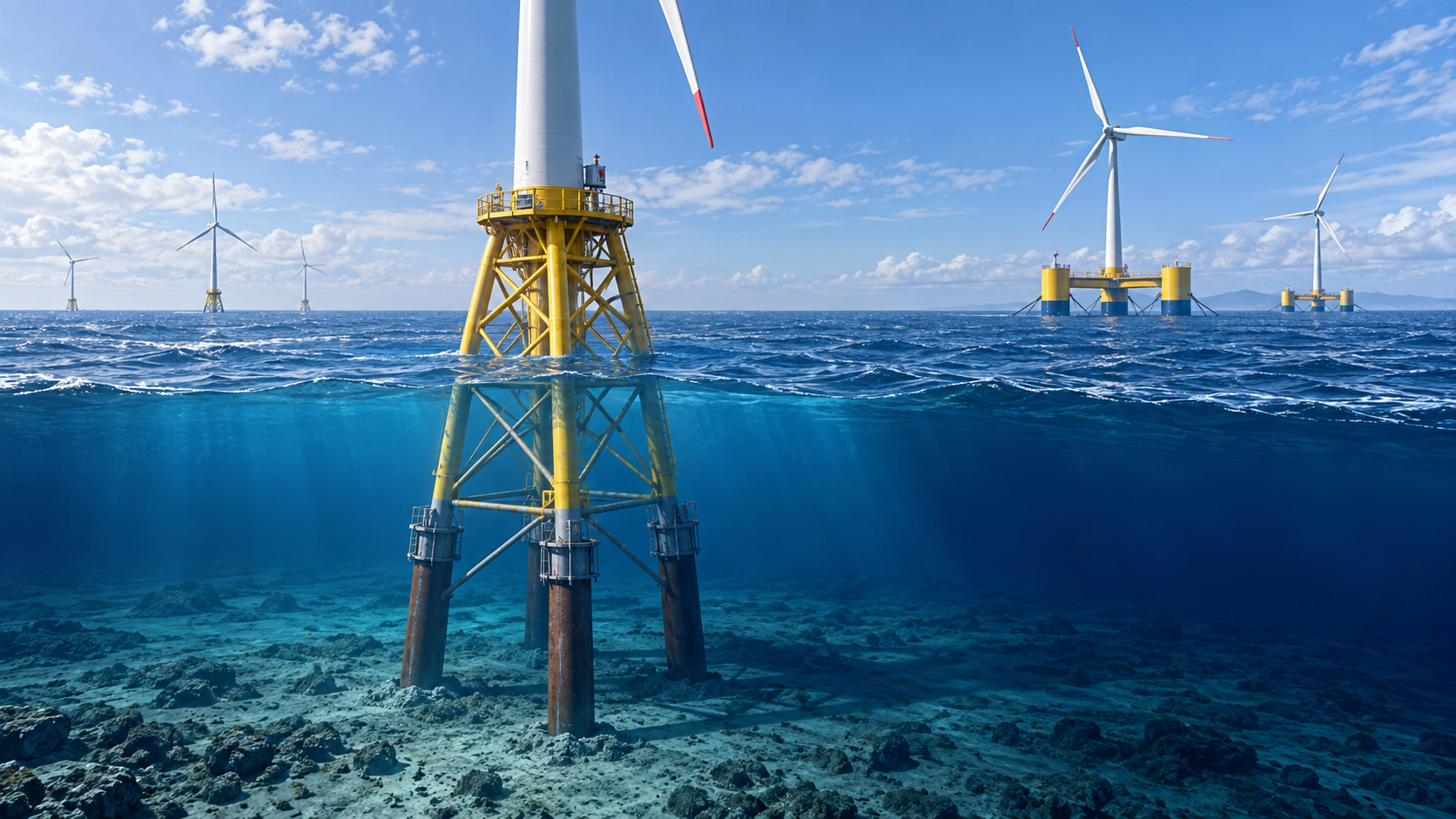
At what point does water depth make deepwater wind jackets impractical for an offshore wind project? Project teams often want a clean cut-off—50 metres, 60 metres, or 80 metres—but the engineering reality is less tidy. A jacket can be technically designed for waters well beyond the range where it remains commercially attractive. The decisive question is not “Can it stand?” but “Can it be fabricated, transported, installed, and maintained at a cost that still supports the project’s energy case?”
As a working rule, fixed-bottom jackets are commonly competitive in roughly 30–60 m of water, especially where soil conditions suit piled foundations and regional installation capacity already exists. Between 60 m and 80 m, they enter a demanding evaluation zone. Beyond about 80 m, deepwater wind jackets are often difficult to justify against floating wind concepts, although exceptional seabed, logistics, power-price, and supply-chain conditions can move that boundary in either direction.
The practical depth bands for jacket foundation selection
In shallow offshore sites, monopiles usually dominate because they are simpler, faster to install, and supported by an established supply chain. Jackets tend to become more relevant as turbines grow and water depths approach the limits of economical monopile dimensions. A well-designed lattice jacket distributes loads through several legs and piles, offering useful stiffness for large turbines in deeper water, energetic seas, or challenging lateral loading conditions.
At approximately 30–50 m: Jackets are viable, but they must compete hard with advanced monopiles and, in some regions, suction-bucket or transition-piece alternatives. Their case is strongest when seabed geology, turbine loads, or local fabrication capability makes a multi-leg structure preferable.
At approximately 50–60 m: The jacket often becomes a serious fixed-bottom candidate. This is where project managers should compare whole-system cost rather than looking only at steel tonnage. The jacket may require more fabrication complexity, but it can avoid some of the diameter, wall-thickness, driving-energy, and vessel constraints associated with very large monopiles.
At approximately 60–80 m: The answer becomes site-specific. Jackets remain technically credible, yet foundation mass rises, pile penetration requirements grow, installation windows narrow, and heavy-lift demands become more consequential. Floating platforms should be evaluated in parallel—not as a distant future option, but as a commercial benchmark.
Beyond approximately 80 m: A conventional piled jacket is usually an exception rather than the default. It may still be selected for a strategic site or an early project with unusual constraints, but the economics need close scrutiny. At these depths, floating foundations can reduce the need for deep fixed-bottom installation, even though they introduce moorings, anchors, dynamic cables, port-space demands, and a different construction sequence.
Water depth is only the first number on the screening sheet
A depth contour on a lease map can create false confidence. Two sites at 65 m can lead to very different foundation decisions. One may have competent soils, moderate waves, a nearby marshalling port, and vessels experienced with jacket installation. The other may combine soft sediments, strong currents, severe winter weather, and long distances from a suitable fabrication yard. The second project can make deepwater wind jackets impractical even though its nominal depth appears manageable.
Seabed conditions are particularly influential. Jackets transfer loads through multiple piles, so pile design, drivability, refusal risk, scour protection, and geotechnical uncertainty all affect cost and schedule. Dense layers or rock can require pre-drilling or alternative pile strategies. Weak or variable soils can increase pile length and demand more conservative structural design. A foundation concept that looks efficient in a preliminary model can become much heavier after detailed geotechnical interpretation.
Environmental loading matters just as much. Water depth increases the lever arm between the seabed and turbine loads. Larger waves, stronger currents, and extreme storm conditions magnify fatigue and ultimate-load requirements. For modern high-power turbines, the jacket is not simply a steel frame under a tower; it is part of a coupled structural system involving rotor thrust, tower dynamics, wave action, and soil stiffness. A modest increase in depth can trigger a disproportionate increase in member sizes, node complexity, and pile capacity.
Why “technically feasible” can still mean commercially impractical
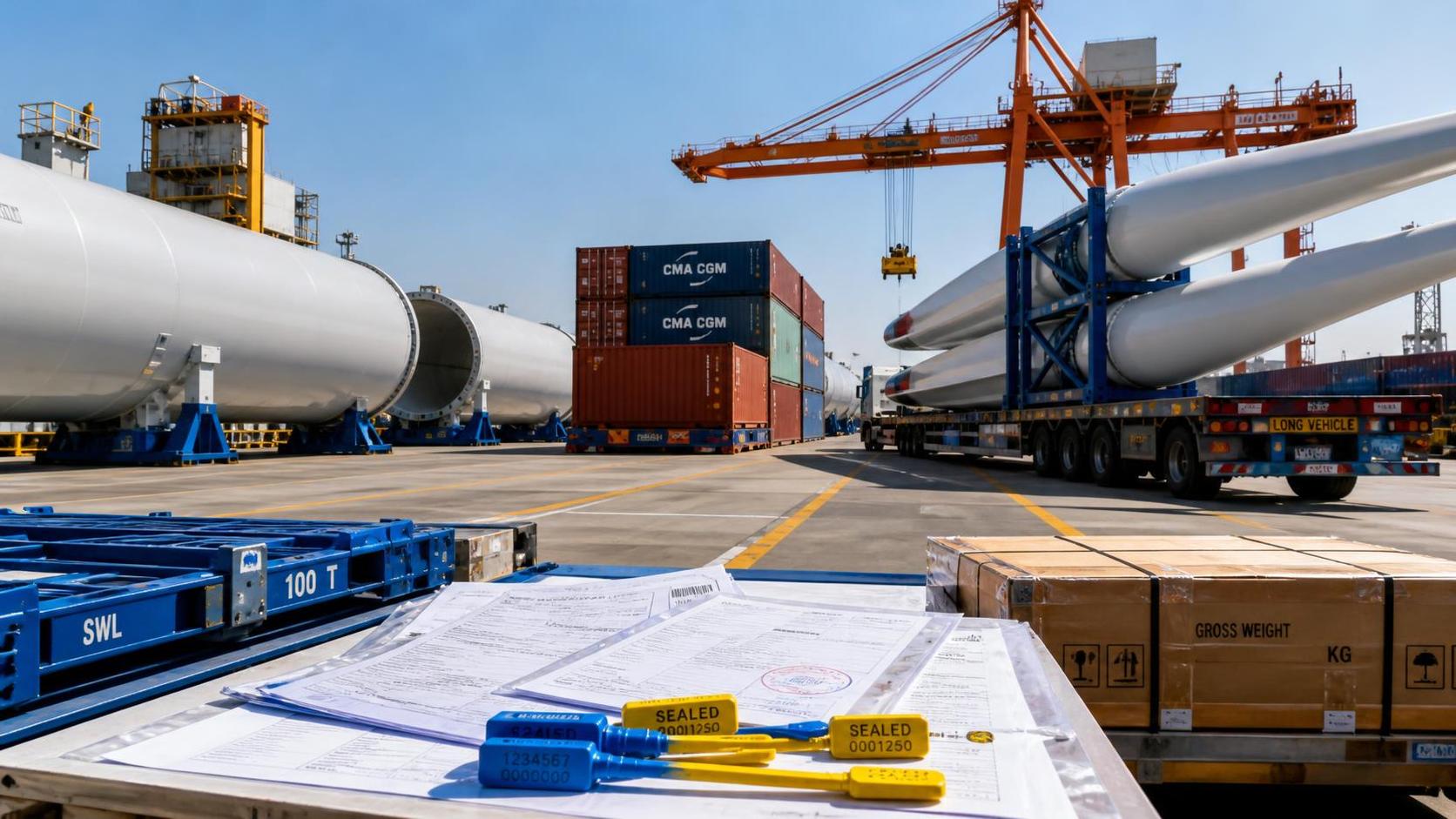
Project managers should be cautious when an engineering study concludes that a jacket is feasible without showing the consequences for the installation campaign. Deepwater jackets need transport frames, lifting plans, specialized vessels, piling spreads, accurate positioning, and weather windows that align across multiple offshore operations. As structures become taller and heavier, vessel availability can become as decisive as structural design.
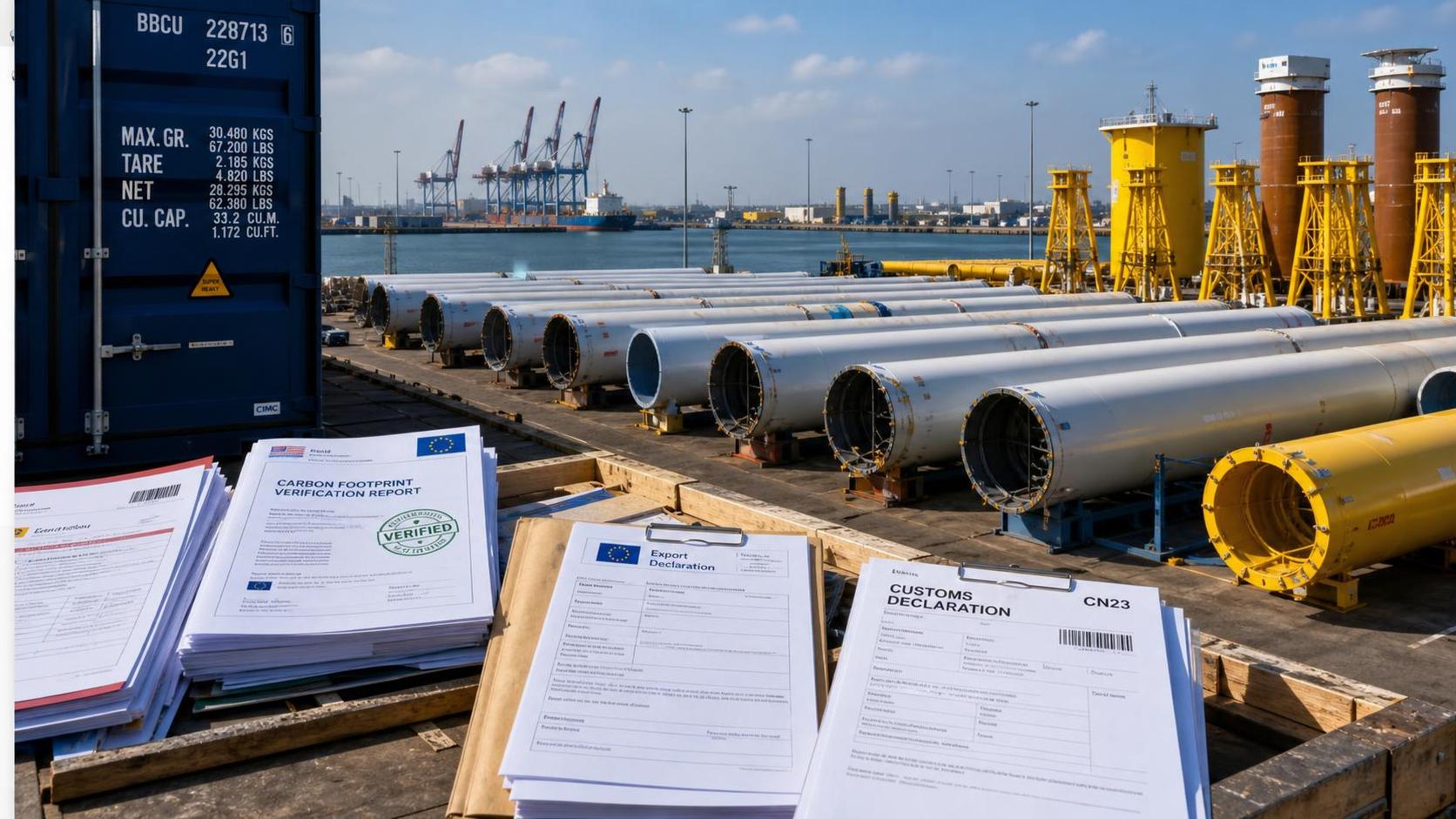
Fabrication is another pressure point. Jackets use many tubular members, braces, welded nodes, corrosion-protection systems, and connection details. The industry knows how to build them, but scaling the design for deeper water and larger turbines can strain yard capacity, quality-control resources, and transport logistics. A project may find that the lowest-cost structural design cannot be delivered on the required schedule.
The more useful metric is therefore not foundation CAPEX in isolation. Compare the expected lifecycle value of each option:
- foundation fabrication and steel intensity;
- installation vessel days, weather exposure, and contingency;
- export and inter-array cable implications;
- inspection, scour management, and repair access;
- schedule risk and its effect on revenue;
- decommissioning obligations; and
- the expected energy yield from the selected turbine and site layout.
A fixed-bottom jacket may retain an advantage when it supports larger turbines with mature operating behavior and avoids the motion-related complexity of floating systems. But that advantage fades if deeper water turns each installation activity into a high-risk offshore campaign.
When floating wind should enter the decision
Floating wind is not automatically cheaper at 70 m, nor is it automatically the answer at 100 m. Its economic case depends on port infrastructure, tow-out routes, mooring and anchor conditions, local content requirements, dynamic-cable supply, and the maturity of the selected floater concept. Still, floating should be included early when the site extends beyond 60–70 m, when depth changes sharply across the development area, or when a fixed-bottom layout would require extensive grading of turbine locations by foundation type.
It is especially important to avoid treating floating wind as merely “a jacket without piles.” Its risks move onshore and into marine systems: hull fabrication, integration quayside capacity, tow logistics, station-keeping design, cable fatigue, and installation sequencing. The comparison must be made at project level, not as a simple steel-cost exercise.
A decision gate for project teams
Before committing to deepwater wind jackets, establish a depth-and-risk gate using bathymetry, metocean data, geotechnical investigation, turbine load envelopes, vessel market intelligence, and port capability. Run at least two foundation concepts through the same assumptions for turbine rating, construction schedule, contingency, financing period, and energy production. If the jacket concept relies on unusually optimistic vessel availability, unproven fabrication throughput, or minimal weather downtime, its apparent cost advantage is fragile.
For many projects, the realistic threshold is not a universal depth but a point at which fixed-bottom complexity begins rising faster than the value it delivers. In benign, well-served conditions, deepwater wind jackets may remain attractive toward 70–80 m. In harsh environments or weak soils, their practical limit may arrive closer to 60 m. Beyond that point, floating wind deserves a disciplined, like-for-like comparison—not because jackets have failed structurally, but because the project has outgrown their most economical operating range.
Recommended News
Industry Briefing
Get the top 5 industry headlines delivered to your inbox every morning.