EU CBAM Adds Monopiles and Jackets From August
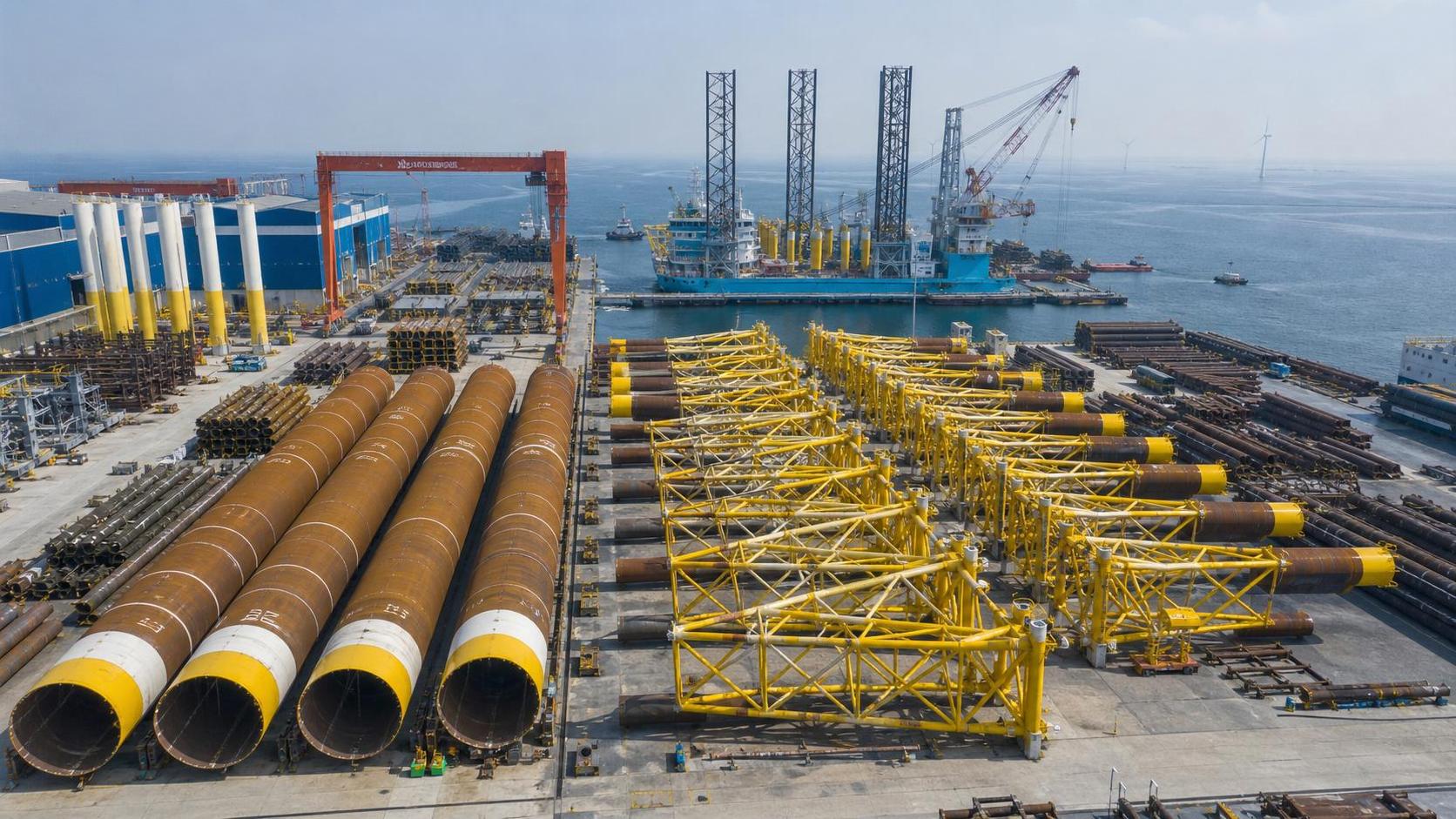
On August 1, 2026, the EU will begin applying CBAM reporting and prepayment requirements to Monopiles and Jackets after the European Commission formally released a revised implementing rule on July 18, 2026. For companies involved in wind power steel structure exports to Europe, the immediate issue is not only product coverage but also delivery execution: suppliers are now expected to provide third-party verified lifecycle carbon footprint documentation covering upstream steel, coating, and transport, with potential customs delays and added carbon cost pass-through risk if that documentation is incomplete.
What the revised CBAM scope now covers
According to the information provided, the European Commission published a revision to the CBAM implementing rules on July 18, 2026 and placed Monopiles and Jackets into the third batch of covered products. The new requirement takes effect on August 1, 2026.
The measure introduces carbon emissions intensity reporting and a prepayment mechanism for these wind power foundation structures. The information also states that suppliers must provide lifecycle carbon footprint reports verified by a recognized third party, and that the reporting scope includes upstream steel, coating, and transport.
The stated direct impact falls on Chinese exporters of wind power steel structures supplying the EU market, especially in relation to delivery procedures and customs clearance.
Where the pressure is likely to appear first
Export delivery moves from product shipment to document readiness
From an industry perspective, direct exporters are likely to feel the change first because the requirement is tied to customs treatment and prepayment arrangements rather than only to pricing discussions. What deserves closer attention is whether carbon documentation can move in step with shipment schedules, contract milestones, and handover requirements.
Upstream material and process records become part of the transaction
Analysis shows that the effect will not be limited to the final fabricator. Because the required footprint information includes upstream steel, coating, and transport, raw material suppliers, processors, and logistics participants may all become relevant to the final export file. The business impact is likely to show up in data collection, traceability, and verification coordination across multiple parties.
EU buyers and project-facing teams may tighten compliance expectations
Observably, procurement teams and project counterparties in Europe may pay closer attention to whether documents are complete before delivery windows are locked. In practice, this can affect acceptance timing, allocation of carbon-related costs, and communication around contractual responsibilities, even where the physical product itself is unchanged.
What companies should watch in the coming period
Check whether reporting boundaries match actual supply chains
Companies should focus on whether their existing carbon data can cover the full lifecycle elements named in the provided information, especially upstream steel sourcing, coating processes, and transport. A narrow plant-level emissions record may not be enough if the submission must reflect a broader chain of inputs and services.
Review third-party verification readiness
The practical issue is not only having a carbon footprint report, but having one verified by a recognized third party. Firms with active or near-term EU deliveries should pay attention to verifier availability, documentation format, and the time needed to complete review before customs and delivery deadlines are reached.
Separate policy wording from operational execution
It is important to distinguish the formal rule change from day-to-day implementation. Analysis shows that companies should watch how customers, customs-facing teams, and internal compliance staff translate the requirement into document lists, submission timing, and prepayment handling, because these operational details often determine whether a shipment proceeds smoothly.
Prepare for cost and timing discussions with customers
Since the provided information highlights the risk of additional carbon costs being passed through, exporters and suppliers should pay attention to how contracts, quotations, and delivery communications address possible cost allocation and timing changes. This is especially relevant where projects are already in execution and documentation obligations may now become more demanding.
Why this reads as more than a routine product-list update
Observably, this development is best understood as a compliance threshold for a specific part of the offshore wind supply chain rather than as a general policy headline. The addition of Monopiles and Jackets matters because it connects carbon accounting directly to the execution of cross-border delivery, and because the required reporting scope reaches beyond the final manufacturing stage into upstream materials and logistics.
Analysis shows that the immediate significance lies in operational pressure, not in any confirmed market outcome. The rule change already creates a clearer compliance expectation, but its full commercial effect still depends on how consistently it is applied in documentation review, customs handling, and buyer-supplier negotiations.
How to read the signal at this stage
At this stage, it is more appropriate to understand the update as an active near-term rule change with longer-term supply chain implications. The confirmed fact is that Monopiles and Jackets are now brought into CBAM accounting from August 1, 2026. The broader industry implication, by observation, is that carbon traceability is becoming more closely tied to fulfillment capability for EU-bound wind power steel structure exports.
That means the development should not be treated as a distant policy signal, but it also should not be overstated as a final verdict on trade flows or market outcomes. The more grounded conclusion is that document readiness, verification capacity, and customer coordination have become more important risk points for affected companies.
Basis of this article and points still requiring verification
This article is based on the user-provided news title, event date, and event summary. The discussion reflects only the confirmed information provided: the revised EU CBAM implementing rules published on July 18, 2026, the inclusion of Monopiles and Jackets in the third batch of covered products, the August 1, 2026 start of reporting and prepayment requirements, and the stated compliance implications for Chinese wind power steel structure exporters.
For this type of industry update, source categories that are usually relevant include official regulatory notices, company disclosures, industry association updates, authoritative media coverage, and standards-related documentation. A specific official source link was not provided in the input, so the exact text and any later clarifications still need ongoing verification. Continued attention should be given to follow-up official wording, practical filing requirements, and any further implementation guidance affecting delivery and customs procedures.
Recommended News

Industry Briefing
Get the top 5 industry headlines delivered to your inbox every morning.