
EU Adds Monopiles and Jackets to CBAM Accounting

On August 1, 2026, the European Commission formally revised the CBAM implementing rules to bring Monopiles and Jackets used in offshore wind foundation structures into mandatory carbon accounting. For Chinese suppliers exporting these products to the EU, the change introduces new reporting and registration requirements tied to lifecycle emissions data and EU ETS registration. For buyers and supply chain participants, the development is worth close attention because it shifts market access conditions from product delivery alone toward documented carbon compliance.
What the revised rule now covers
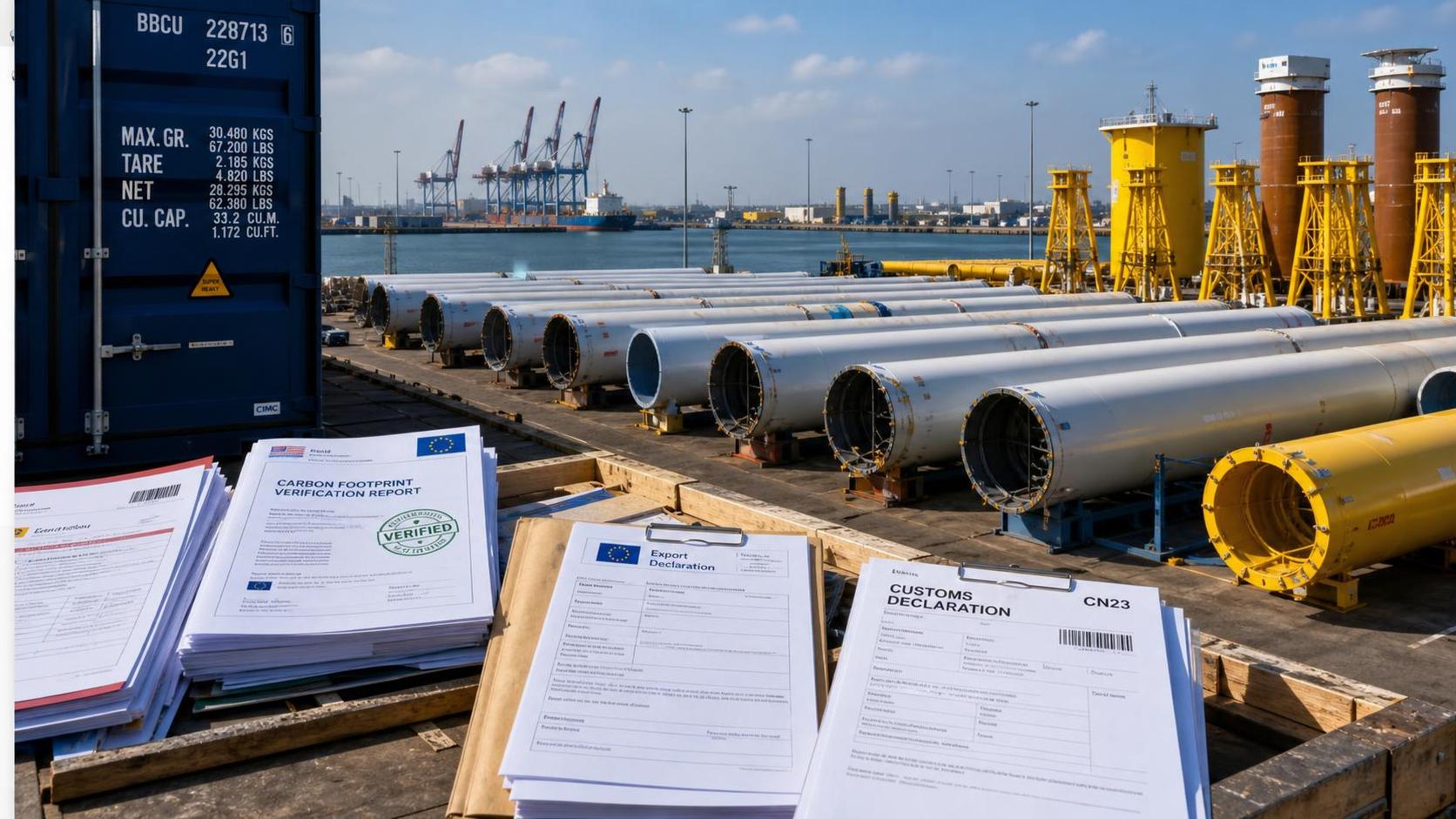
The confirmed change is that, from August 1, 2026, Monopiles and Jackets in wind power foundation structures are included in the mandatory accounting scope of the Carbon Border Adjustment Mechanism. The European Commission has formally issued a revision to the CBAM implementing rules reflecting this adjustment.
The information provided also confirms two direct compliance implications for affected exporters: lifecycle carbon emissions data must be provided, and EU ETS registration must be completed. The adjustment directly affects Chinese offshore wind infrastructure suppliers exporting to the EU.
It is also confirmed that, for overseas buyers, the rule change is expected to reshape supplier entry requirements and cost structures within the procurement chain.
Where the pressure is likely to appear first
Export-facing offshore foundation suppliers
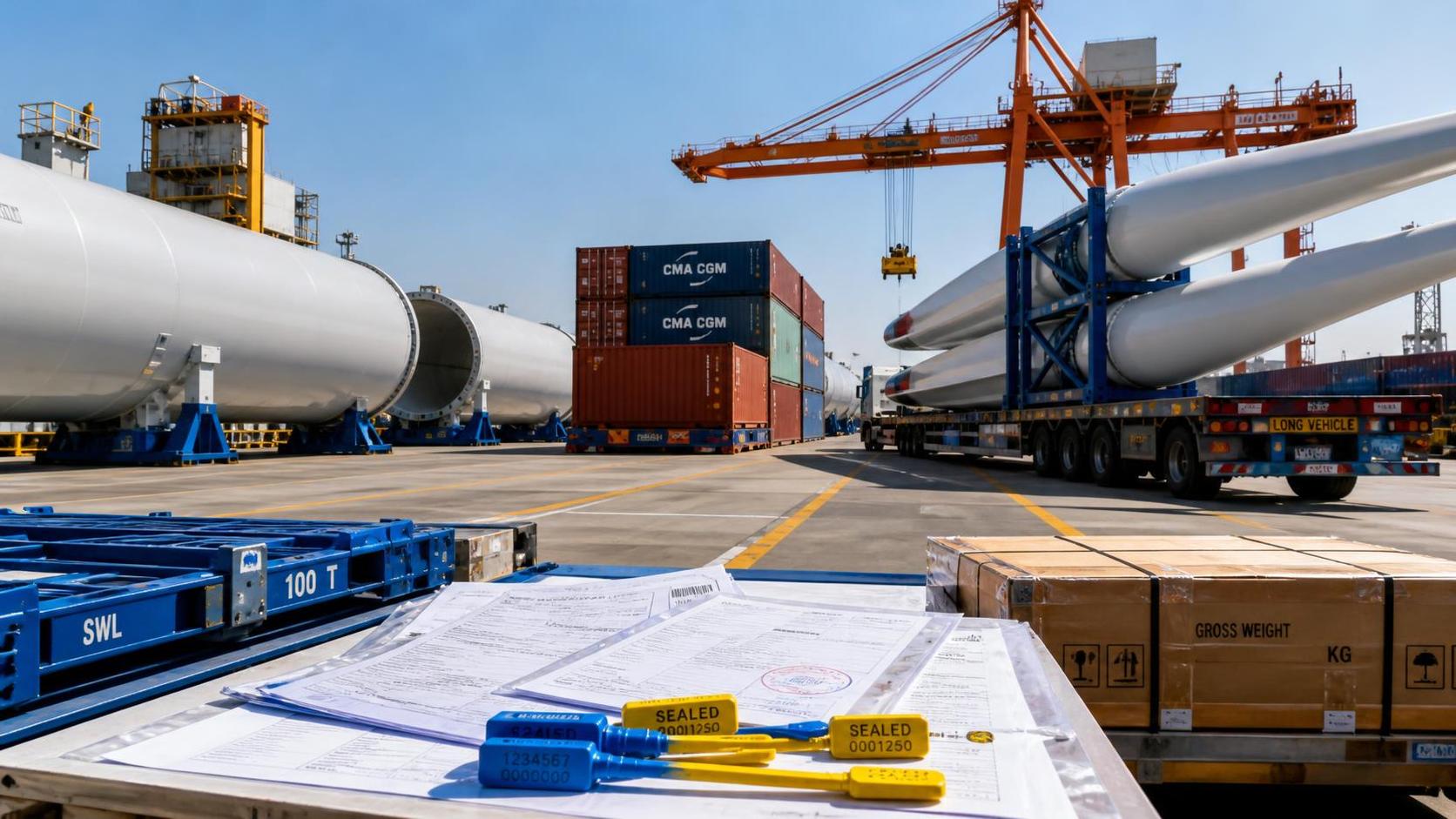
From an industry perspective, this group is the most immediately exposed because the rule applies directly to products shipped into the EU market. The practical impact is likely to center on emissions data preparation, document readiness, and internal coordination between production, compliance, and export functions. What deserves closer attention is whether existing product files and delivery documentation are sufficient to support lifecycle carbon disclosure in a form accepted by counterparties.
Overseas buyers and project procurement teams
For buyers, the change matters because supplier selection may increasingly depend on whether a manufacturer can provide the required carbon accounting information and complete the necessary registration steps. The effect is not limited to price comparison; it may also influence bid evaluation, supplier prequalification, and contract risk review. Procurement teams should therefore pay closer attention to carbon-related documentation as part of sourcing and delivery planning.
Supply chain and trade service participants
Analysis shows that service providers involved in export execution, document handling, and compliance support may also feel the impact, because the rule introduces added sensitivity around the completeness and consistency of trade and compliance records. Even where they are not the regulated party, these participants may need to adapt their workflows to support emissions data submission, registration-related coordination, and buyer-facing document checks.
What companies should monitor now
Carbon data readiness and document integrity
It is more appropriate to understand the immediate task as preparation rather than assumption of a settled operating model. Companies involved in affected exports should review whether they can provide lifecycle carbon emissions data in a clear, traceable, and contract-ready format. Any mismatch between technical files, production records, and customer documentation could become a practical risk point.
Registration and compliance sequencing
The information provided confirms that EU ETS registration is required, but does not provide detailed implementation procedures. Observably, businesses should treat registration timing, internal ownership, and supporting materials as active compliance items that need tracking, rather than waiting until shipment stages to address them.
Procurement terms and supplier qualification
For buyers and upstream sourcing teams, a key issue is whether current supplier qualification standards adequately reflect the new accounting requirement. Analysis shows that tender documents, supplier onboarding materials, and contract clauses may need closer review where Monopiles and Jackets are involved, especially if carbon reporting obligations must be evidenced before award or delivery.
Delivery planning under changing market access conditions
What deserves closer attention is the possibility that compliance preparation could affect transaction timing and execution certainty. The input does not confirm specific delays or outcomes, so this should not be treated as an established result. Still, companies with EU-facing business should monitor whether the new requirement begins to influence shipment planning, customer approval cycles, or document review thresholds.
Why this reads as an execution signal
Analysis shows that this development is more than a general policy direction, because the rule revision identifies a specific product category and a specific effective date. That gives the market a clearer compliance trigger than a broad consultation signal would provide. At the same time, the available information does not include full operational detail, so the industry still needs to watch how the requirement is reflected in enforcement practice, buyer expectations, and transaction documents.
Observably, the significance of the change lies in how carbon accounting is becoming part of commercial access for offshore wind foundation exports. The immediate issue is not only whether companies understand CBAM in principle, but whether they can support actual trade flows with the required data and registration status.
How the market should read this change
At this stage, the event is best understood as a rule change with direct compliance consequences rather than as a complete picture of final market outcomes. The confirmed facts already indicate that exporters of Monopiles and Jackets into the EU will face added accounting and registration obligations, while overseas buyers may adjust qualification and cost review accordingly.
A rational reading is that this is an implemented policy signal with practical trade implications, but not yet a basis for sweeping conclusions about market results. Continued attention should remain on how requirements are applied in procurement, documentation review, and cross-border delivery execution.
Basis of this article and what still needs verification
This article is generated based on the user-provided news title, event date, and event summary. For events of this type, relevant source categories usually include official announcements, releases from regulatory authorities, customs or trade administration information, industry association updates, standard-setting documents, and reporting by authoritative media.
No specific official source link was provided in the input, so the underlying official publication and any later interpretive materials still require ongoing verification. What remains important to monitor includes detailed policy wording, compliance interpretation, certification or registration practice, changes in tender documents, market feedback, and how affected companies implement the requirements in actual export operations.
Recommended News

Industry Briefing
Get the top 5 industry headlines delivered to your inbox every morning.